₹77,152 Cr
Cloud kitchen market size projected by 2028
~40%
Lower operational cost vs traditional restaurants
5–8x
Faster time-to-launch vs a full restaurant
Why Cloud Kitchens Fail — Despite a Booming Market
India's cloud kitchen sector is growing at a staggering pace — yet a significant number of new operators shut down within their first year. The irony? It's rarely the food that fails them. It's the operations.
Managing a cloud kitchen is fundamentally different from running a dine-in restaurant. There's no walk-in traffic to soften a slow night. Every order comes through an ordering system, and every delay or wrong bill directly affects your revenue and reputation.
Key insight: Cloud kitchens live and die by execution. A messy billing process or unclear view of daily sales can quietly drain revenue before you even notice the problem.
1. Keep Your Order Taking Simple and Consistent
The biggest source of confusion in many cloud kitchens is taking orders without a clear system in place — relying on paper slips, verbal communication, or switching between multiple tools. A straightforward order-taking process cuts down on errors and keeps things moving.
A good system for cloud kitchen order taking should do three things clearly:
- Record each order in one place as it comes in
- Make it easy to see which orders are open and which are pending
- Generate a GST-included bill quickly once an order is ready
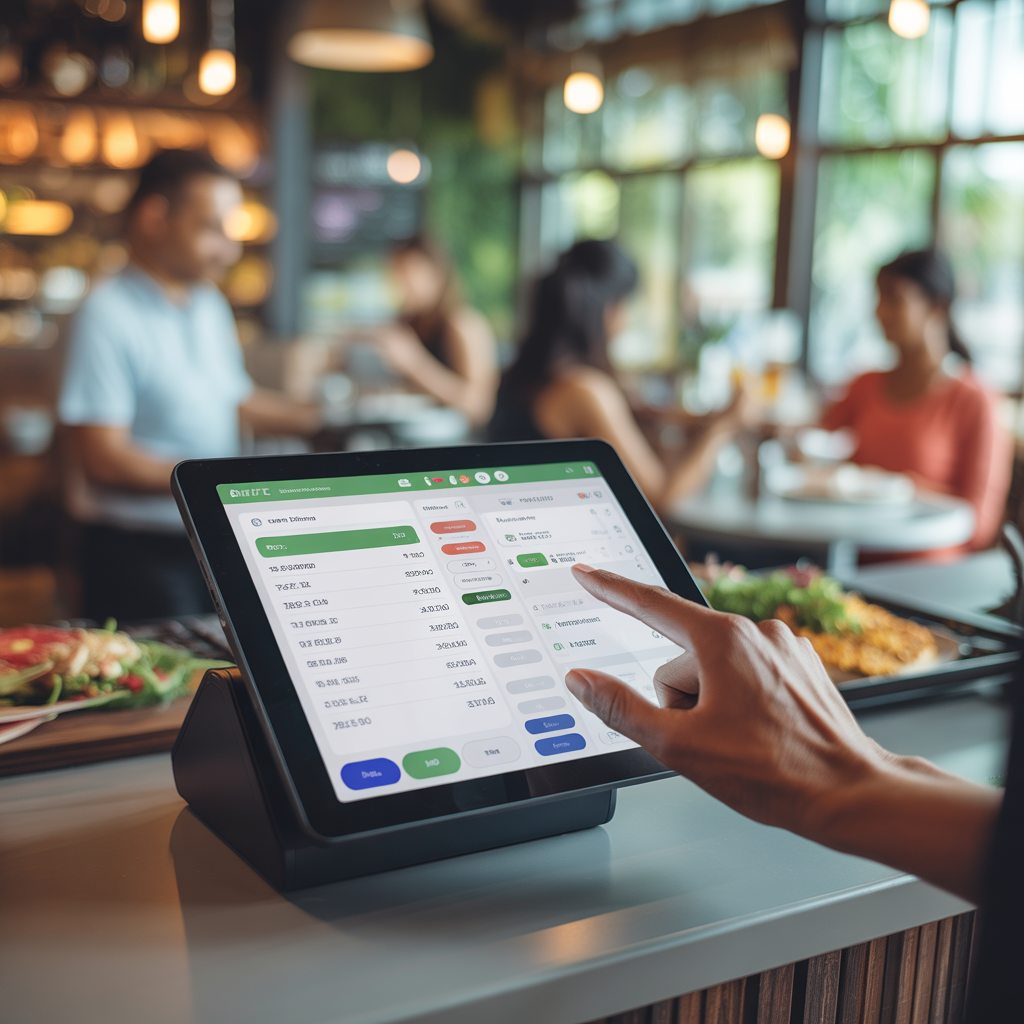
DineMitra handles exactly this. When an order is recorded, it appears in the system so you can track its status and generate a bill without any back-and-forth. The process is straightforward by design — there's no complex setup required to get started.
2. Get Billing Right Every Time
Billing mistakes are more common in cloud kitchens than most owners realise. When orders are written on paper and billed separately, small errors add up — wrong amounts, missing items, or GST not applied correctly.
A reliable billing process means:
- Each order generates one clear, GST-included bill
- There's no manual calculation involved — the bill comes from what was recorded in the system
- Every transaction is logged, so you have a record at the end of the day
Simple truth: GST billing handled through a system is less error-prone than doing it by hand. That alone saves time and reduces the chance of discrepancies when you review your day's sales.
3. Keep Your Menu Accurate and Up to Date
Not every dish that works in a dine-in setting travels well. In a cloud kitchen, your menu needs to be built around delivery resilience — items that maintain quality during transit. But beyond what you serve, keeping your menu accurate in your system matters just as much.
- Remove items you've stopped serving — an outdated menu causes order confusion
- Update prices whenever they change, so every bill reflects the correct amount
- Organise items into clear categories to make order taking faster
- Review your menu periodically and retire slow-moving items that complicate prep without contributing meaningfully to revenue
DineMitra makes it straightforward to add items, update prices, and reorganise categories whenever your menu changes. You don't need to call support or wait for anything — you can update it yourself in a few minutes.
4. Check Your Sales Numbers Every Day
The biggest advantage cloud kitchens have over traditional restaurants is that every transaction is digital and logged. You should be looking at your sales figures daily — not weekly, not monthly.
- Daily sales total: Tells you whether today was above or below your average, so you can spot slow periods early
- Monthly sales overview: Helps you see trends over time — which weeks performed well and which didn't
- Order history: A record of what was billed gives you something to refer back to if there's ever a discrepancy
DineMitra's sales overview is basic by design — it shows your daily and monthly totals clearly, without unnecessary complexity. For an early-stage cloud kitchen, that's usually all you need to stay on top of how the business is doing.
5. Always Know What's Open
One of the simplest ways to reduce confusion in a busy kitchen is having a clear view of which orders are still open. When orders are tracked on paper, it's easy to lose track — especially during a rush.
With DineMitra, open and pending orders are visible on screen at a glance. You can see what still needs to be billed and what's already been closed out. It's a small thing, but it makes a real difference when you're moving quickly.
6. Keep Your Tools Simple
You don't need a complicated setup to run a cloud kitchen well at the start. Most operators do best with a system that's easy to understand and doesn't require training to use.
- A billing and order-taking system that works on a device you already have
- A menu you can update yourself without needing technical help
- A basic sales report you can check at the end of each day
DineMitra is designed to work on any device — a tablet, a desktop, or a phone. There's no expensive hardware to buy. You can start taking orders and generating bills from day one, and adjust your menu as your kitchen evolves.
Get Started Today
Run your cloud kitchen with less confusion
Order taking, GST billing, menu management, and a basic sales overview — all in one straightforward system. 30-day free trial, no credit card required.
Summary: The Cloud Kitchen Efficiency Checklist
- Record every order in one system — not on paper or across multiple tools
- Generate GST-included bills from what's in the system, not from memory
- Keep your menu accurate — update prices and remove items that are no longer available
- Check your daily and monthly sales totals every day
- Use the order status view to keep track of what's open and what's been billed
- Keep your setup simple — a device you already have is enough to get started
Managing a cloud kitchen comes down to having clarity — over orders, billing, your menu, and your sales numbers. The operational basics are what separate kitchens that grow from those that burn out. Get the simple things right early, and everything else becomes easier to manage from there.
DineMitra Team
We're the team behind DineMitra — a restaurant POS and management platform built for Indian food businesses. We write about operations, technology, and growth strategies for restaurants of all types.